
Early productive mornings – out of all behaviour change that I have tried to cultivate over the years, this habit proves to be the most elusive, but highly rewarding one.
Countless research has shown ( and lots of successful people will tell you) that how we begin the day sets the tone of the entire day in terms of productivity and state of mind.

Surah Al-Ahzab: 21
The most successful person in all aspects of his life (Al-Mubarakpuri, 2015; Lings, 1991) and whose supplication is always Granted by Allah s.w.t. made this supplication about early mornings:

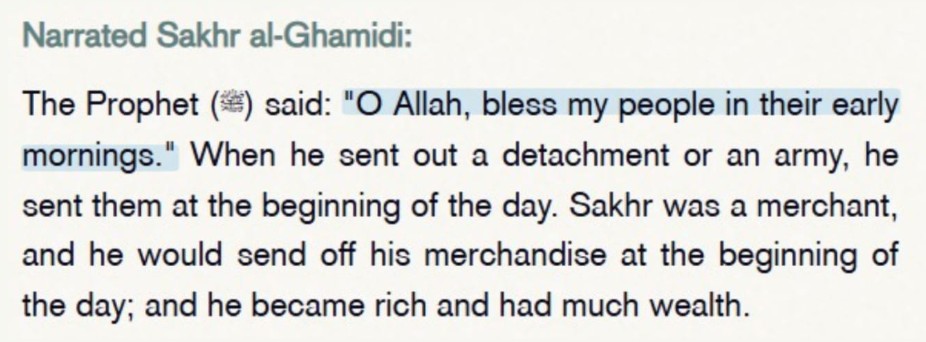
Sunan Abi Dawud 2606 [Sahih – Al-Albani]
And what better way to start the day than with Al-Quran? Rasullullah ﷺ begins his day in a state of mindfulness and gratitude to Allah s.w.t. for the gift of being alive for yet another day. He ﷺ begins the day with reciting Al-Quran in the dawn congregational prayer.
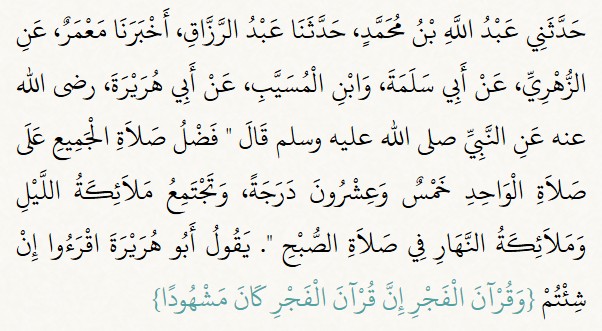
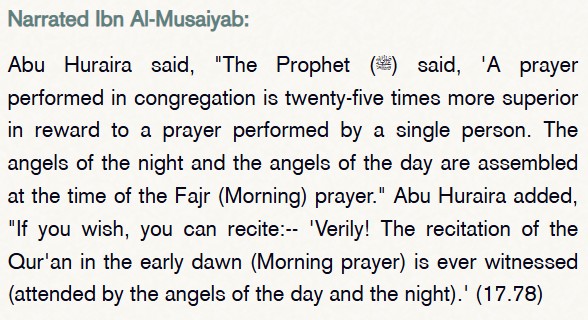
Sahih Al-Bukhari 4717
Rasullullah’s ﷺ primary focus is honing into our primary purpose in life through the Words of Allah s.w.t., and that is to prepare for our eternal life after death.
Cultivating a Blessed Morning Routine
We should maximize our early hours because of the barakah (blessings) found in it due to the Prophet ﷺ supplication. It is usually the quietest time for us to focus. It is also the time when our willpower is at its peak to tackle the most critical and difficult tasks we have set for ourselves (Faris, 2024).
How do you decide the most important tasks to you? Forget about answering emails or replying texts. Honestly, nothing is really that urgent unless it is life-threatening. This decision goes back to your purpose in life, and that is to worship Allah s.w.t. and gather your good deeds as a khalifah fil-ard.
The activities that you select as the most important tasks (MITs) is entirely up to you, depending on your unique set of strengths that Allah swt has Given you and your preferences. These tasks can be in the domains of relationship building with Allah s.w.t., family, career, community-building and lifelong learning, to name but a few.
WHEN YOU MAKE-OVER YOUR MORNINGS, YOU CAN MAKE-OVER YOUR LIFE.
LAURA VANDERKAM, WHAT THE MOST SUCCESSFUL PEOPLE DO BEFORE BREAKFAST (2012)
The key to a productive morning is to schedule your activities around prayer times instead of the other way round (Faris, 2024). After penciling in prayer times, choose and schedule in two or three M.I.T.s (most important tasks) into your morning routine.
Great reward necessarily requires hard work AND commitment. It might seem daunting, especially to night owls, to reset the body clock but, Islam, as a way of life, celebrates human fitrah. The five daily prayers align with the movement the sun and the concentration of light. Therefore, the best reference point to develop a healthy circadian rhythm (which by itself has many health benefits) are the five daily prayer times.
Figure 1
The Path of the Sun and Prayer Times
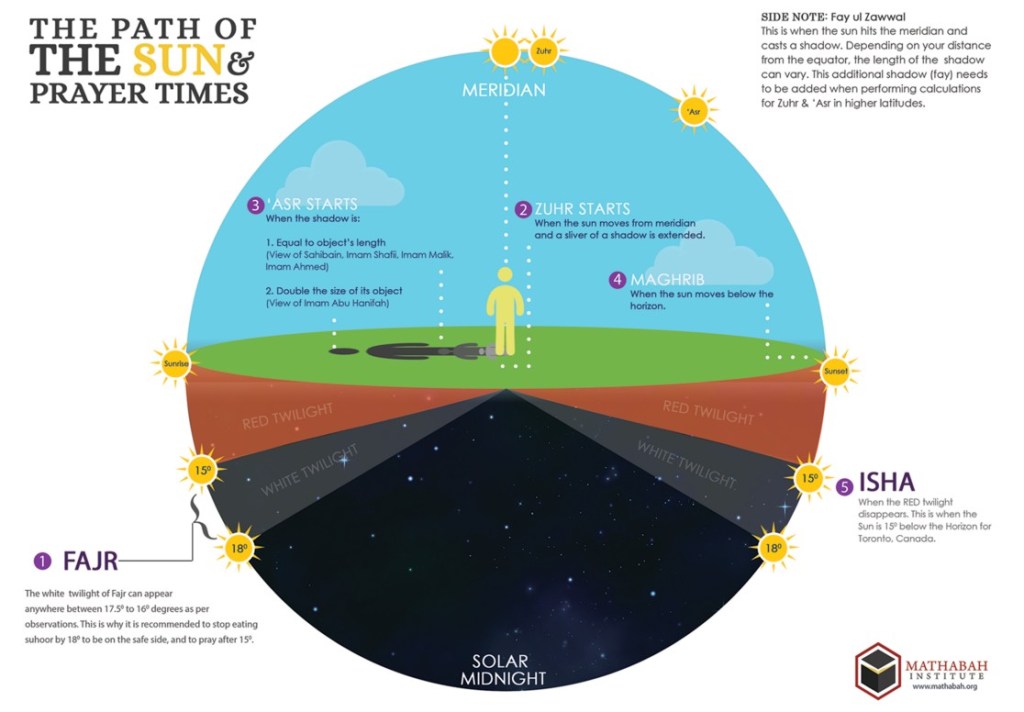
Note. From The Path of the Sun and Prayer Times (Info-Graphic) by Mathabah Learning Centre, 2018, (https://www.mathabah.org/the-path-of-the-sun-and-prayer-times/).
Scheduling your activities around the prayer times is a surefire way to make your day more productive. When you start your day right, you will be rewarded with a boost of dopamine to help you stay motivated on the tasks that you have to accomplish for the rest of the day. It will surprise you how easy you will find these tasks after surmounting the highest hurdle you have set for yourself early in the morning.

45-Day Challenge
As with any habit, the routine has to be repeated enough times for it to become automatic (Clear, 2018; Mitchell, 2014). Do not make the mistake of wanting to change your whole morning routine at once. Rather, you should consider building the routine gradually by creating and maintaining one habit at a time.
The process of improving your morning routine can be understood quite simply through the four laws of behaviour change (Clear, 2018; Dunlap et al., 2019). Our brains run through the four step patterns cue, craving, response and reward upon which all actions are initiated and executed.
The four laws to guide you in building good new habits are:
- 1st Law (Cue): Make it obvious
- 2nd Law (Craving): Make it attractive
- 3rd Law (Response): Make it easy
- 4th Law (Reward): Make it satisfying
(Clear, 2018)
It is important to decide what M.I.Ts go into your morning routine in advance and to pin down the time and location, the most obvious cues for your brain to act on. An alternative is to stack a new good habit before or after a habit that you have already learned (Clear, 2018).
Example: After Fajr prayer with my family, I will read the tafsir for 20 minutes.
By contrast, make the cue for the bad habit you are trying to replace less obvious in the environment. For example, if your phone tend to distract you, use a tablet or the good old-fashioned book to read the tafsir. If the notifications on your phone still bother you, keep it in another room before you do your Fajr prayer so you do not need to keep resisting the temptation to grab your phone each time you hear a ping.
As to the 2nd law of making the new habit more attractive, join a group that you have something in common with where the habit is normalised (Clear, 2018). If you want to exercise more, join a pilates class at a nearby gym; if you want to read the tafsir regularly, do it with your family.
Temptation bundling is also an effective way of building a new habit (Clear, 2018). You pair the habit that you need to do with the habit that you want to do, to increase your desire (dopamine spike) in order to take action. Enjoy that refreshing sweet-smelling soap shower every morning? Sneak in 15 minutes of sit-ups before you shower. Love that cup of coffee every morning with biscuits? Do it only after you have done the new habit you want to develop.
Example: After Fajr prayer with my family, I will read the tafsir for 20 minutes. After I read the tafsir for 20 minutes (need), I will have a cup of coffee with some biscuits (want).
The M.I.T.s can be scheduled as focus sessions that can span from 20 to 90 minutes with a 5 to 15 minutes break in between (Cirillo, 2018). Building a morning routine will allow you to hold these focus sessions at the same time each day ensuring you have ample opportunities to practise your new habit.
Figure 2
Example of a morning routine:
| Time | Examples |
| 5.30 am to 6.00 am | Jama’ah Fajr Prayer |
| 6.00 am to 6.30 am | MIT 1: Read Al-Quran & Tafsir |
| 6.30 am to 7.00 am | Get Ready for Work & Breakfast with Family |
| 7.00 a.m. to 8.00 am | Commute to Work (Alight from bus 2 stops earlier for a Morning Walk) |
| 9.00 am to 10.00 am | MIT 2: Work on a Community Inclusion Project |
| 10.00 am to 10.15 am | Dhuha Prayer |
| 10.15 am to 11.30 am | MIT 3: Learn from a self-paced Online Programming Course |
If you find it too intimidating to get started on a new habit, that is because your brain has not yet develop the muscle for the activity or rather your neuron pathways are not yet firing optimally for the action to feel automatic. Hence the old adage: it has to get worse before it gets better.
That said, it is also true that humans are also most motivated to do what is most convenient and that is not necessarily not a bad thing. At least at the beginning, make your new habit easy to perform. Have the tafsir book nearby in your musollah, with water, sweet smelling bukhoor and anything else that might make it easy to slip into reading after prayer. Clear (2018) recommends the the two-minute rule to get a habit started. I tried the two-minute rule myself when I started a self-paced Arabic online course and it worked. For example, instead of reading the tafsir for 20 minutes, try reading one page a day. Before you know it, that 20 minutes you set aside each day will be a breeze.
Habit tracking is also a great way to make your new habit satisfying according to the fourth law of behaviour change. It is a visual reminder of the progress you are making toward becoming the person you want to be and helps you stick to the habit and not break the habit streak even when laziness kicks in. Everyone does habit tracking differently. My students dropped tokens into a bottle each time they complete a task. Some people tick off a to-do list. I myself have a medium-sized whiteboard beside my desk to put on coloured magnetic labels into each day’s column after completing a good habit.
While habit tracking helps you focus on the process (Dweck, 2017) instead of the ultimate long-term goal, working at a difficulty level that is just at manageable reach, helps to maintain your motivation and desire to keep working on your productive morning routine. In education, this often referred to as the zone of proximal development or ZPD (Vygotsky, 1978). ZPD is the mid zone of difficulty that is not so easy that it causes boredom or too difficult that it leads to failure. Once a habit is established, it is important to gradually introduce a slightly higher level of difficulty to keep the habit novel and interesting.
Overcoming Bad Habits and Procrastination
Do not be disheartened if you find it hard to learn the new habits that make up your new morning routine or if you fail to stick to the habits that you are learning. Some people take months, others years. As long as you have not practised learning the habit for 10,000 hours (Gladwell, 2008), you are not done yet!
Your progress might seem feeble or barely noticeable at first but it is still extremely rewarding in the long run. Here’s why:
Figure 3
The Plateau of Latent Potential
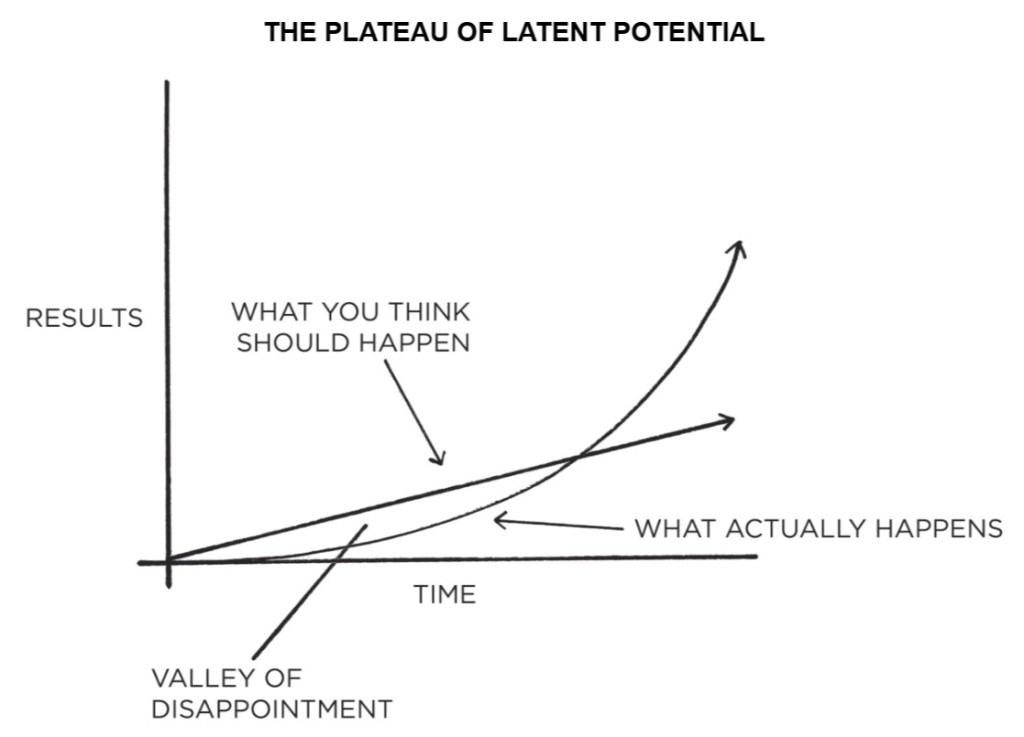
Note. From Atomic Habits: Tiny Changes, Remarkable Results by J. Clear. 2018, Avery.
- As long as you are learning new good habits, you are replacing bad ones. As we know, bad habits cannot be made to disappear without a positive replacement behaviour (Dunlap et al., 2019).
- A tiny improvement each day can have astounding results. If you can improve by 1% each day, you will be 37 times better after a year through the process of positive compounding (Clear, 2018).
Figure 4
1% Better Every Day

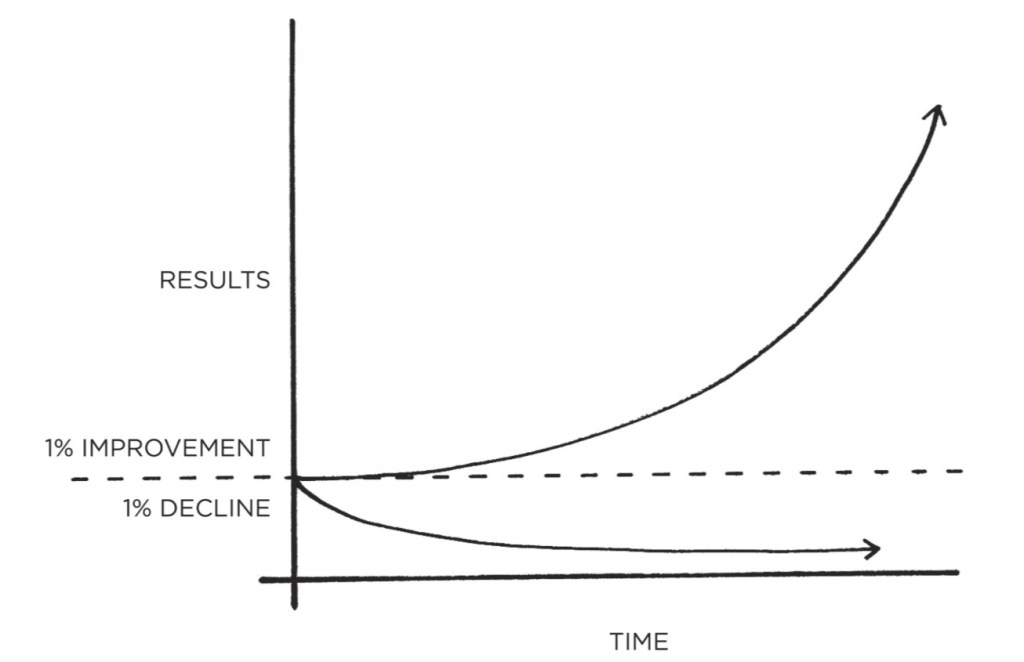
Note. From Atomic Habits: Tiny Changes, Remarkable Results by J. Clear. 2018, Avery.
Trying to force outcomes and improve quickly will inevitably lead to frustration and abandonment of the goal to start the day productively (Dweck, 2017; Faris, 2024).
INSTEAD OF TRYING TO FORCE RESULTS, WE FOCUS ON CULTIVATING THE RIGHT MINDSETS, VALUES AND RITUALS IN OUR LIVES FOR GROWTH AND BARAKAH. JUST LIKE A GARDENER TENDS TO HIS PLANTS, WE TEND TO OUR INTENTIONS AND ACTIONS. WE BECOME FOCUSED ON BEING PROCESS-ORIENTED VERSUS ACHIEVEMENT-ORIENTED AND THIS USUALLY LEADS TO LONG-TERM SUCCESS , LEARNING AND GROWTH.
mohamMED FARIS, THE BARAKAH EFFECT: MORE WITH LESS (2024)
So let’s work on improving our early morning routine, 1% at a time, and remember to make lots of du’a to Allah swt for strength and determination, for He is Bestower of all bounties.
الحمد الله
References:
Quran.com. (2025, May 14). Surah Al-Ahzab. https://quran.com/33?startingVerse=73
Sunnah.com. (2025, May 14). Musnad ‘Ali Ibn Abi Talib, Musnad Ahmad. https://sunnah.com/ahmad:1320
Abu Ghuddah, A. A. (2016). Muhammad ﷺ The Perfect Teacher: An Insight into His Teaching Methods (2nd ed.). Muslims at Work.
Cirillo, F. (2018). The Pomodoro Technique: The Acclaimed Time-Management System That Has Transformed How We Work. (2nd ed.). Crown Currency.
Al-Mubarakpuri, S. R. (2015). The Sealed Nectar: Biography of the Noble Prophet. (2nd ed.). Darussalam.
Clear, J. (2018). Atomic Habits: An Easy & Proven Way to Build Good Habits & Break Bad Ones. Avery.
Dunlap, G., Iovannone, R., Kincaid, D., Wilson, K., Christiansen, K., Strain, P. S., & Knoster, T. (2019). Prevent-Teach-Reinforce: The School-Based Model of Individualized Positive Behavior Support (2nd ed.). Brookes Publishing.
Dweck, C. S. (2017). Mindset: Changing The Way You think To Fulfil Your Potential. (Updated ed.).
Faris, M. (2024). The Barakah Effect: More with Less. Claritas Books.
Faris, M. (2024). The Productive Muslim: Where faith meets productivity (7th ed.). Claritas Books.
Gladwell, M. (2008). Outliers: The Story of Success. Little.
Lings, M. (1991). Muhammad: His life based on the earliest sources.(4th ed.). The Islamic Texts Society.
Mathabah Learning Centre. (2018, September 23). From The Path of the Sun and Prayer Times (Info-Graphic). https://www.mathabah.org/the-path-of-the-sun-and-prayer-times/
Mitchell, D. (2014). What Really Works in Special and Inclusive Education: Using evidence-based teaching strategies (2nd ed.). Routledge.
Vanderkam, L. (2012). What the Most Successful People Do Before Breakfast: A Short Guide to Making Over Your Mornings - and Life. Portfolio.

Vygotsky, L.S. (1978). Mind in Society: The Development of Higher Psychological Processes. Harvard University Press.

 in this temporary life...